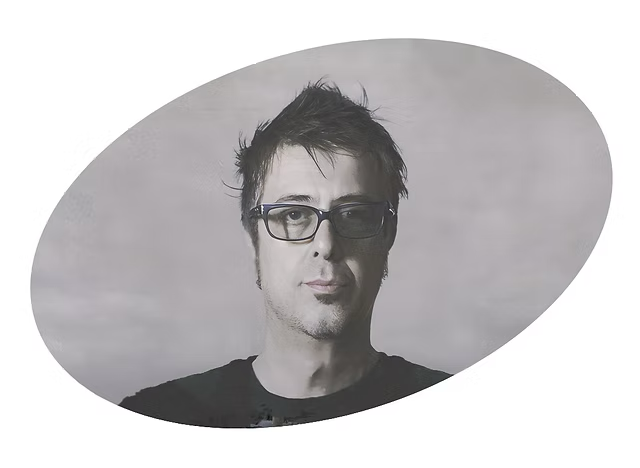
Lawrence LaFerla
Context still matters more than computation. Building context intelligence is a human task. The humans have taken over. What is HWMM and CIP? Wouldn’t you like to know? New white paper:
— Lawrence LaFerla (@LawrenceLaFerla) October 21, 2025
🔗 https://t.co/Aa5EmMabhk #LLM #MeaningMatters #BrandStrategy
Lawrence LaFerla
Hi. I'm Lawrence LaFerla. The following may be the most self-revealing bio I've ever shared on social media.
At first glance, I might seem a bit like Detective Columbo—unassuming and slightly scattered—but much like him, I’m often focused and adept at piecing things together in unexpected ways. I was raised in the 1960s by three older sisters who introduced me to a world of music before I even knew what each record was about. My earliest memory is playing an imported Beatles EP on my Bozo’s Big Top record player just a few weeks before the Fabs first landed in the U.S., a moment that shaped me in ways that of course I couldn't foresee at age three years, three months. But it meant that my childhood would unfold in the 1960s along with record releases by all the usual suspects.
I’ve been living and working between Osaka and Kobe for the past three decades. I run JAPANtranslation, a specialized division of WIP Japan. Most of what makes me valuable in this business comes from real experience—years of working directly with overseas clients, listening carefully, building systems that make things smoother, and saying no to mismatches early. I’m not flashy about it, but I’m good at reading the room, staying reliable, and helping people solve problems quietly in the background. I’ve shaped our intake process, messaging, and even trained an AI intern to support the way we work. It’s a boutique model, but with real infrastructure behind it. That combination—personal trust and real capacity—is what makes the whole thing work. Check me out on LinkedIn if you need to know more. Need to reach me? Please use my contact form.
Today, while I’m a sort of Beatles "journalist-scholar," my musical tastes naturally go far beyond them. I’m more likely to queue up the Rolling Stones or dive into Mississippi blues, Chicago blues, London dub, avant-garde composers or experimental grooves.
My life has been full of finished and unfinished projects, from being a vocalist in a post-punk band during the vibrant ’80s scene to hosting a podcast nowadays. The podcast, Beatles60 isn't just about them, but about the world they inhabited and shaped 60 years ago. It explores the cultural and historical forces of the time using a “context in sequence” approach to history. It's not a fan group but I'm lucky to be connected with so many Beatles uber-fans, maniacs, experts, and authors. Without them, I'd have only childhood (and pre-teen) memories to go on.
When I’m not creating, I try to stay grounded through cycling, yoga, and Buddhist practice—activities that (if I fit them into each day) keep me healthy and balanced as I navigate life at 64. I value thoughtful conversations and embrace the ideals of an open society. Above all, I believe in confident understanding and bridging divides. I welcome intellectual friendships with people from most perspectives. You don't need to be a coastal elite to approach me. (I can hang with regular folk!) For me, what keeps me going are the insights that arise, connections made, the finding of meaning in the details. I'm surprised to find how much others tend to overlook.
Origins and Early Stirrings
I grew up north of Boston (500 yards behind Hilltop Steak House), the youngest of five children, with the 1960s as my backdrop. My interest in music began absurdly early—my earliest living memory involves playing a French-import Beatles EP on a toy record player just before their American debut. That particular pressing, released on Odeon in December 1963, featured “Till There Was You,” which I played on repeat. I had no idea who they were—just that the sound pulled me in. This memory survived what developmental psychologists sometimes call “the Great Purge,” when most early childhood memories are discarded around age seven. For some of us, records were our Rosebuds—objects charged with emotion, played enough times to last a lifetime.
By early 1964, our household had the first American Beatle albums, and I’d already become the kind of preschooler who operated the family stereo by trial and error. My older sisters were deep into pop culture, and the music collection expanded throughout the decade—from Gerry and the Pacemakers to Sly and the Family Stone. In 1965, I vividly remember staring out the window of the suburban station wagon used for our kindergarten carpool and hearing the Stones’ “Get Off Of My Cloud” blaring from the radio at least twice a day. I didn’t understand the lyrics, but the rhythm lodged itself in my brain, right alongside the scent of vinyl and the sound of needle drops.
Still, none of this makes my childhood more special than anyone else’s. It was just the backdrop I had: raised by teen girls in a 1960s household full of records, TVs, radios, and constant cultural input. My older sibs were my guides into that world of music, influencing me in ways I couldn't possibly foresee at the time. They even attended concerts at iconic venues like the Boston Tea Party, indirectly fueling my fascination with the music scene. Those early impressions might seem small, but they still feel real. Like “Rosebud” in Citizen Kane, they carry a poetic authenticity, not because they matter, but because they still stir something. That emotional echo is what keeps me curious.
School Daze
In 9th grade, my U.S. History teacher, Mr. Serino, once called my question about “checks and balances” the smartest he’d ever heard. At the time, it felt like a pleasant surprise—but looking back, those moments weren’t just sparks of curiosity. They were early signs that my mind worked a little differently, often picking up on patterns others might overlook. I don’t want to exaggerate, but it was like those scenes in movies where young Clark Kent first realizes he can jump higher than he should, one of those moments when you pause and think, "Oh, I’m a little different." Remember, at any point in my life I could probably be described as awkward but gifted. And I tend to hide both.
For most of high school, I was a solid student—senior class vice president, friendly with just about everyone, and doing well academically. But in the second half of my senior year, things took a turn. That’s when, right before classes, my friends and I, in our infinite teenage wisdom, started rolling spliffs that were more architectural feats than casual smokes—multiple papers wrapped around what would’ve filled a whole nickel-bag, burning slow and steady through the morning haze. This became a morning routine. Imagine trying to calculate molecular weights in that state of mind! My focus drifted outside the classroom walls, leading to some dramatic academic struggles as I dove deep into emerging interests, the kind that tend to absorb 17-year-old boys.
Despite the academic slide, I stayed close with the vice principals and the principal. Thanks to my class officer status, and probably a bit of goodwill, they told me straight out that they simply had to graduate me.
After high school, I embarked on a period of intense self-discovery and practical learning outside formal education. For eight years, I balanced daytime jobs in offices and warehouses with my growing immersion in the music scene. It was a time of exploration and personal growth, not so different from how many young adults find their footing—mine just happened to take a less conventional route than straight to college.
Bridging Suburb and Stages
My bio tends to lean toward the mental, I know. There’s a lot about ideas, interpretation, and long-term focus. But I’ve always lived—like everyone else—as a sentient organism in a body, not just a brain in a jar. I don’t have much in the way of sports trophies, but I’ve run cross-country, lifted warehouse freight, and spent years performing on loud stages in sweaty clubs. Also, this may be my sole athletic boast: I can throw a frisbee with eerie accuracy. If frisbee bowling existed, I’d be an Olympian.
The real transition, from high school in Saugus to Boston’s underground scene, didn’t come in one leap. It happened through the slow grind of repetition—rehearsals in basements, shows in lofts, audiocassettes played loud in crowded vans. The persona I sometimes put onstage was loud, kinetic, even theatrical, with a few moves copped from Jagger, McCartney, or Strummer. It wasn’t just for show; it was how I held my own in chaotic rooms, how I channeled inner noise into outer signal. That mix of embodiment and awareness, grounding raw energy, was my real education long before formal study resumed.
That same instinct carries into the present. Today, I stay balanced through cycling, yoga, and Buddhist practice—not as performance, but as counterpoint. It helps keep my mind from being pulled in too many directions. Sobriety, too, reshaped how I navigate intensity. But looking back, the early years taught me what it means to move through noise without being swallowed by it. That’s still the trick, whether I’m writing, strategizing, or just listening closely.
Rock and Roll Years
My dive into music started early, but my true rock and roll journey began in 1975 when I met Garry Miles in 9th grade. We became constant musical partners, and by 1979, the UK mod and ska revival, particularly the film Quadrophenia and The Specials' first album, had completely hooked us. I started exploring Jamaican compilations, inspired also by Gang of Four's first record, and even wrote my first ska-punk hybrid, "Teenage Captive," around then. I devoured underground music publications, always searching for new sounds. Eventually, I left Salem State University to focus entirely on the band.
In mid-1980, Garry and I responded to a musicians-wanted ad from jazz-trained guitarist Steve Harrell, who was looking for players "into ska reggae punk etc." That ad also brought in the charismatic frontman Dee Rail (Derryl Johnson), solidifying the core lineup of 007. I became one of the two frontmen, singing and playing backing guitar alongside Dee, and we, along with Steve, were the band's primary songwriters. It’s wild to think Dee and I were unknowingly in the same crowd photo at a Specials show months before we ever met. Destiny, or perhaps just a very observant coworker of Steve's, had other plans.
Those eight years between high school and university were far from a detour; they were a crucial developmental phase, a natural process for growing as an individual. While balancing daytime jobs in offices and warehouses, my nights were spent fully immersed in Boston's vibrant club scene, absorbing influences from punk, blues, dub, and ska. I honed my stage presence as a frontman for 007 (later Dub7 and The Kessels), learned about "adult life" outside of formal education, and began exploring philosophy on my own. It was a period of intense self-discovery that, while perhaps atypical in some cultures, is a common and valuable path of exploration in the U.S.
By my late twenties, I was ready for a shift. Tired of nightclubs and experiencing a personal awakening to literature and philosophy, I enrolled in a Boston University course through the employee benefit offered to workers at the BU Bookstore’s warehouse. As mentioned earlier, Howard Zinn’s Law & Justice in America was my reentry point. His generous comments on my final paper—about our own effort to unionize the Bookstore and warehouse—made a lasting impression. It still makes me smile that BU management, by offering that tuition benefit, unwittingly subsidized my own organizing energy. That course was a turning point. It hooked me on getting back to learning. This intellectual spark, coinciding with my sobriety and stepping away from the rock scene, even selling my guitar to Mark Sandman, propelled me back to formal education with a new intensity and focus. I started calling myself Lawrence instead of Larry. It was, after all, my legal name and it still is.
Leaving the stage behind didn't mean an end to intensity or discovery. If anything, those years of raw experience and newfound clarity only deepened my hunger for understanding, leading me toward a different kind of rigorous exploration.
Graduate-Level Undergraduate Journey
My academic journey was anything but conventional. Returning to UMass Boston, I approached my undergraduate studies with a drive often seen in graduate-level work. Frankly, it felt a bit like grown-ups playing against kids. After an eight-year gap filled with life experience and personal growth, I returned as a motivated adult with a clear purpose, pouring my energy and attention into research rather than the social life common among younger undergraduates. Graduating magna cum laude with majors in social psychology and sociology and a minor in anthropology, my experience was driven by a deep commitment to truly understand and deepen subjects, far beyond just chasing grades.
I had the privilege of conducting original empirical research, designing social experiments under the guidance of Professor Don Kalick (Harvard Ph.D.), whose expertise in experimental methods in social psychology was invaluable. My self-directed studies, including applying hermeneutics to analyze everyday philosophies, were mentored by Professor Arthur Millman (Chicago Ph.D.), who even invited me, as the only non-philosophy major, to a philosophy seminar for top students where we delved into figures like Darwin, Popper, and Kuhn. This foundational work was further validated when Professor Richard J. Bernstein (The New School for Social Research) evaluated my final paper, affirming it was “in the right direction.” My interdisciplinary approach also led to studies in corporate anthropology with Professor Tim Sieber (NYU Ph.D.), including comparative research on power distance in the U.S. and Swedish financial industries. This work was complemented by an invitation to have desk space in Uppsala University’s Företagsekonomiska institutionen (Business Studies Department). The following year, I conducted research on employee ownership at a car rental company under the supervision of Professor Ellen Greenberg (Columbia Ph.D.), head of UMass Boston’s MBA program. This broad and rigorous mentorship provided access to research libraries throughout the university system in Boston and Cambridge, and helped solidify my view of this period as equivalent to graduate study—a trajectory that, in its focus and serious commitment, would look indistinguishable from a master’s student’s work anywhere in the world.
Before presenting my research proposal in Sweden, I secured an informational interview with the head of the training and development department at Lehman Brothers in downtown Manhattan. He saw strong potential in my work and offered encouraging insights that reinforced the importance of my research. Though I wish I could remember his name, he remained in contact like a mentor, providing guidance that helped shape my confidence.
Arriving in Sweden, I met with the department at Uppsala University and presented my proposal in person. Later, they formally invited me to conduct research. However, when the expected American-Scandinavian Foundation grant fell through, I had to cancel the planned research trip. Even so, the experience—both in New York and Uppsala—deepened my sense of self-efficacy, affirming that I could navigate academic and professional spaces with purpose and initiative.
That same rigorous, interpretive spirit, honed through intense academic exploration, didn't stop at graduation. It simply found a new, more public, and incredibly collaborative application in one of my key interests. The drive to truly understand and weave complex narratives continued to hum, eventually leading me to a unique historical project that's anything but textbook. My deep dives into interpretive social research, qualitative analysis, and even philosophical concepts like "phenomenology" and "hermeneutics"—once confined to research libraries and academic seminars—now find a dynamic, collaborative outlet as I help make sense of cultural history for a wider community.
After graduating, I decided to move to East Asia. Having studied modern life in the West in depth, I wanted to expand my understanding by experiencing the modern world more broadly.
Beatles60: Living History, Unfolding Insights
My involvement with Beatles60 is a deep dive into the history of The Beatles and their era, embracing a unique "living in the history" approach. We chronicle their story and the world around them day by day, exactly sixty years later, like a continuous, real-time chronicle or a "daily soap opera." This rigorous context-in-sequence methodology is paramount; it reveals how events unfold and influence each other, avoiding the hindsight bias that distorts so much of history. For instance, understanding why John Lennon inserted a "blue beat" interlude into "I Call Your Name" only makes sense when you see how the music press was buzzing about ska just days before the recording session.
Unlike a typical fan club, Beatles60 operates more like a historical society or study group. We immerse ourselves chronologically, primarily through daily posts and discussions on Facebook groups, complemented by a podcast offering deeper context. Our content juxtaposes everything from British music magazines and daily photos to firsthand accounts and academic sources, all to understand the development, context, and interconnectedness of events as they unfolded. This approach prioritizes discovery, allowing authentic insights to emerge naturally rather than being systematically proven.
As co-host of the podcast and co-founder of the main Facebook group, I approach Beatles60 with a scholarly mindset rooted in interpretive social science and humanities. My goal is to explore the Beatles' historical and cultural impact by "learning" through the process, rather than merely celebrating fandom. While I sometimes contribute content or explain our project's unique methodology, my primary role involves facilitating our vibrant community, encouraging contributions from both dedicated "Beatle nerds" and those who lived through the era. We deeply value the perspectives of passionate 'Beatle nerds' and those who experienced the era firsthand—their vast knowledge enriches our collective understanding in ways no archive could. It's about collaboratively making sense of the 1960s through the lens of their extraordinary story, embracing the idea that history is a dynamic and unfolding narrative rather than a fixed set of facts. It's common to hear people say the Beatles changed the world. And they surely did. But how often do we step back and examine how the world was shaping them all along?
Collaborating with Communities of Deep Knowledge
Whether immersed in historical research or navigating brand communication, I've found immense value in engaging with deeply passionate, niche communities. It’s what I’ve come to call "collaborating with the otaku thing," a deep respect for those who dedicate themselves fully to specialized knowledge, often in ways that outsiders might overlook.
In my involvement with Beatles60, for example, I approach the project as a scholar focused on analysis and context. While my background brings a particular rigor, I firmly believe "it truly takes a village" to understand an era. I value the contributions of "data dumpers," those meticulous individuals who compile vast amounts of raw information, recognizing they provide the essential building blocks for deeper interpretation. Our Facebook groups thrive as collaborative spaces where raw contributions from dedicated “Beatle nerds” and firsthand witnesses help us stay grounded in real-time history and avoid hindsight bias.
[Note: On some social networks I use the name Wrence Fer. It's just my full name without La, La and la.]
This same appreciation for specialized understanding extends into my professional work at JAPANtranslation. As Division Head, my role involves assessing client needs and bridging cultural gaps, particularly for overseas businesses targeting Japanese customers. My academic background in social psychology and anthropology provides a framework for analyzing client needs and understanding user lifeworlds. Years of experience have trained me to notice subtle cues and emotional undertones that reveal the deeper logic of specific consumer subcultures. This immersion in a client’s world—much like a Savile Row tailor crafting a bespoke suit—is essential to ensuring that translated content resonates authentically. Even my work training domain-calibrated systems for contextual understanding is about building highly specialized knowledge frameworks that strengthen human expertise rather than replace it.
Ultimately, my cognitive style and professional experiences reinforce the profound value of deeply specialized knowledge found within any passionate community. It's about respecting and collaborating with those who live and breathe their chosen fields, allowing us to gain rich insights that go far beyond surface-level information.
Shaping Messages for User Lifeworlds
At JAPANtranslation, my role extends beyond standard linguistic processes. While our brilliant team of linguists handles the day-to-day translation work, my strategic involvement is dedicated to ensuring content resonates deeply with its intended audience, particularly for high-stakes projects.
For these critical initiatives, I often step in to interpret the "why" behind the words. This means delving into the hopes, needs, interests, subcultures, worldviews, dreams, and fears of the ultimate end-users. This isn't just about national culture; it's about understanding shared lifeworlds that transcend borders. For our clients' clients, it's about spotting the deeper reasons for brand loyalty. Through our +Refine service, I provide precise, human-centered guidance to our linguistic team, ensuring the adapted material isn't just accurate, but genuinely impactful and perfectly attuned to the target audience's reality. When that final copy feels right—when it fits, flows, and persuades—it reflects the seamless collaboration of many dedicated people.
That same drive to understand how messages resonate in precise contexts extends beyond my professional responsibilities and into a profound personal interest: how information itself is preserved and understood in our rapidly evolving digital landscape.
Working Methods
My work depends on disciplined rereading and structured refinement—methods that align with what’s now called the Hermeneutic Workflow Methodology Movement (HWMM). HWMM defines a rigorous way of thinking through language, treating each pass as an interpretive test of coherence and intent. It reflects the same conviction that’s guided me all along: meaning emerges through context, and clarity comes from rigorous revision.
I’ve always believed that clarity comes from working through material until its structure reveals itself. That approach aligns with HWMM, which defines interpretation as a disciplined analytical process, not an act of personal expression. It treats rereading and dialogue as instruments of verification, testing precision and coherence through repeated engagement. Its discipline is one of methodical reasoning, not shortcuts.
When I look at my own routines of drafting, reflecting, and adjustment, they mirror HWMM’s insistence on interpretation before impulse. The method formalizes what experienced practitioners already do instinctively: pursue structural accuracy through reflection and recalibration. Each iteration contributes to the interpretive loop that keeps writing precise, coherent, and fully human.
Earlier this year I published a white paper called Building Context Intelligence for the Next Decade. It’s written for brand stewards, owners, and leaders who need to align communication systems with authentic meaning rather than surface messaging. The paper extends the Hermeneutic Workflow Methodology into practical territory—showing how interpretive reasoning can strengthen the design of knowledge frameworks, improve message coherence, and preserve human context inside large organizations. It connects two long-running ideas of mine—the Hermeneutic Workflow Methodology (HWM) and the Context Intelligence Portal (CIP)—as tools for structuring clarity, continuity, and trust in complex communication environments.
Understanding Information in the Digital Age
Beyond my professional roles, I have a deep interest in how information is preserved and understood in our increasingly digital world. This isn’t about static expertise, but a continuous process of learning shaped by a layered analytical mindset. I’m often frustrated by superficiality and the erosion of trust in what passes for “knowledge” online, which drives my effort to cut through artificiality and get to what’s real and meaningful. With the rise of LLM-driven search, the internet is becoming something like a vast, interconnected Wikipedia. That shift fuels my curiosity about how to make digital documentation both structured and adaptable—even for topics outside Wikipedia’s notability thresholds. I explore metadata systems such as JSON-LD and Open Graph to help ensure that ideas, archives, and projects can be accurately contextualized and retrieved. This personal commitment grew stronger through experiences like rediscovering and restoring my own band’s long-lost recordings, a process that underscored how fragile digital memory can be. My approach, much like my work on the Beatles60 project, centers on context and a nuanced understanding of historical narratives. I refine interpretive methods to balance accuracy with narrative integrity. And I take satisfaction in tracing details others overlook, filtering distortions, and preserving meaning with care.
Whether I'm diving into historical archives or navigating the digital information ecosystem, my approach is always guided by a consistent philosophical framework that recognizes the multifaceted nature of knowledge itself.
How I Approach Knowing Things
So, how do I actually figure things out? It's a question I think about a lot, and it boils down to a few different ways of "knowing."
Malleable Universals
When I'm analyzing something complex—historical events, cultural patterns, or interpretive social research—I work through every layer until the structure starts to make sense. I look for relationships, not shortcuts, connecting facts through context and cross-verification. The goal isn’t to flatten uncertainty but to trace how meaning holds together under scrutiny. I value writing that treats facts as part of a living narrative, where coherence emerges through disciplined examination rather than quick conclusions.
Practical Wisdom in Action
Understanding people and navigating social situations is a whole different ballgame. My deep processing means sometimes I'm taking in everything – all the subtle cues, hidden attitudes, and unspoken dynamics – before I can form a quick reply. It's like my brain has a momentary "pause button." To bridge that gap, I might even lean into what I call "fake extroversion," throwing out a bit of silliness to keep the conversation flowing. It's my way of staying present, and sometimes it gets a laugh, but it's a bit of a tightrope walk. Ultimately, this intense observation, much like how Detective Columbo pieces things together, gives me a pretty solid read on what's truly going on. It's a humbling part of just navigating life.
Informative Particulars
Then there's the practical side of knowing – the workaday craft. In my professional life, my philosophy is "Standard on the Outside, Evolving on the Inside." I'm constantly refining how things get done, always looking for practical ways to boost precision. This includes developing and calibrating internal language systems designed to mirror our reasoning process. I see it as an apprenticeship with semantics, always aiming for accuracy that endures. Off-the-shelf frameworks can assist, but only when retrained for the specific communicative goals at hand. My work treats these systems as apprentices in understanding, ensuring their outputs remain precise, human-centered, and aligned with professional intent. It’s like training a horse: progress depends on structure, repetition, and trust. Just as a horse doesn’t respond reliably without conditioning, a linguistic framework won’t refine its output without sustained correction. Through deliberate iteration, it learns to prioritize relevance over noise. It takes time, but once trained, it becomes a dependable partner in thought.
Still Here, Still Curious
So, that's me. My path's been a bit of a zigzag, but every turn has added another layer to how I make sense of the world. What has stayed constant is a habit of looking for structure and coherence—from stage lights in punk clubs to the quiet focus of analytic work. It all comes down to curiosity and the drive to uncover order within complexity. There’s satisfaction in tracing meaning through tangled ideas, finding my footing in demanding conversations, and recognizing when clarity finally clicks. Mostly, it’s the people I meet and the shared insights along the way that make it worthwhile. This isn’t a highlight reel. It’s a record of steady discipline, reflection, and curiosity—an ongoing pursuit of understanding for its own sake.
Many thanks to Vivian Zito for writing a recent long-form archival narrative about my 80s band. Her piece, Lives in Dub, is a fun read and everyone’s encouraged to check it out.
I released a single with my band a few years ago. Loosen Up with The Kessels was actually recorded back in the mid-80s on analog tape in Boston, but it was shelved before release and then lost for over 30 years—until the original reel finally resurfaced and was restored in the UK. The Kessels (previously known as 007 and Dub7) were a Boston band blending punk, new wave, dub, and pop with a mellow edge. At the time, the track was considered “too pop” for indie radio, and after we quietly disbanded, the song faded into obscurity—until 2023, when the tape was found, baked, digitized, and mastered with care. You can hear me singing on that final restored version. It’s a little time capsule—equal parts charm, loss, and belated rebirth.