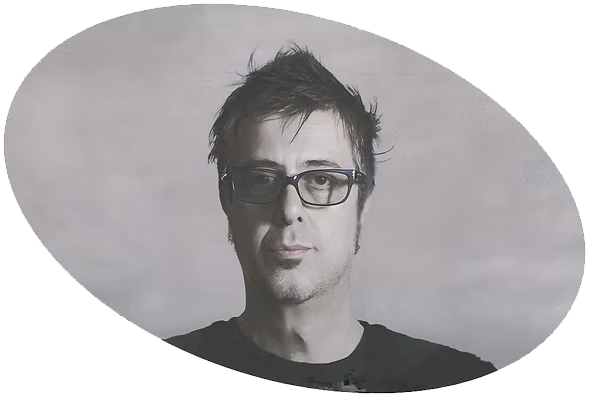
Lawrence LaFerla
The Signal in the Noise
Lawrence LaFerla is an American-born strategist, writer, and business developer who has lived and worked in Japan since 1994. His career follows two parallel tracks: a senior executive role in the language-services industry and his work as a writer on strategic leadership in the information era. These paths unfolded during a period of major change in corporate environments. In the 1970s, offices relied on paper files, clerical routines, and hierarchical flows of information. Over the following decades, digital systems replaced filing cabinets, networks reshaped communication, and global firms began to treat information as a central asset. By the 1990s and 2000s, corporate spaces had shifted from managing documents to managing knowledge, and later to managing data at scale. LaFerla’s work developed in parallel with these changes, linking the lived experience of corporate practice to emerging questions about how organizations preserve judgment in increasingly automated settings.
Loftier than I’d pitch, but on point
NotebookLM stitched this overview together from my own notes. The tone is a bit more epic than I’d ever use about myself, but it’s a decent map of how the pieces of my work ended up coalescing into Context Method. It's accurate.
Of course it'd be beyond arrogant to claim that this is THE missing piece of the global puzzle. It's one architecture for a problem a lot of serious people are wrestling with.
JAPANtranslation (WIP Japan Corp.)
Bridging Worlds: JAPANtranslation and Enterprise Language
As the founder and Division Head of JAPANtranslation (Jt), a specialized division of WIP Japan Corporation, Lawrence is a "surrogate owner" for the division. His primary role is business development, where he focuses on client management for long-term partnerships, many spanning over a decade, and negotiates contracts for the company. He also serves as the division's main copywriter and spokesman.
His strategic model is "hands-on at scale," an approach that combines the dedicated, senior-level care of its partners with the enterprise-scale capacity and infrastructure of WIP Japan. As a "gatekeeper," he designed the division's intake flow to ensure that high-value prospects connect directly with senior staff.
Writing on strategic leadership
Building Context: A Biography of Method
The Context Method framework that he's associated with began as a slow gathering of fragments. A file clerk watched the choreography of signatures and memos on the twenty-second floor of Boston’s Prudential building. At eighteen, Larry found himself in the middle of a string of weekends driven by strange aphorisms and relentless provocations designed to break down mental models and rebuild them. The entire vibe screamed West Coast, that heady, cosmopolitan mix of Eastern spiritual discovery and aggressive, Western self-actualization. It required an immediate psychological and linguistic immersion that was a thousand miles away from anything a kid from Saugus (MA, not CA) would be accustomed to, yet it somehow still adhered to a kind of recognizable, culturally legible roadmap for some damned thing or another. He remained skeptical. What stayed was the structure of the training, the sense that language could move reality a few inches at a time, and the recognition that insight could be engineered. Transformation wasn’t mystical. Methodology mattered. The thought stayed.
There was no master plan, only a string of jobs and experiments: music, bookstores, temporary offices, classrooms. The stage taught how judgment travels through a group when five people try to execute one vision. Bureaucracy taught order. Teaching taught empathy for how interpretation shapes outcomes. Each new vantage point circled the same unnamed problem.
Somewhere in the early nineties the threads began to coil around each other. Social psychology described what instinct already knew. Organizational research gave structure to intuition. Bernstein's Beyond Objectivism and Relativism handed over the missing key: practical wisdom as the bridge between reason and experience. The pattern started to name itself.
His decades in Japan turned the theory into practice. Transcreation/adaptation of marketing copy required the same patience as philosophy and the same precision as business. Each project demanded that judgment be recorded before the words themselves. Out of that discipline grew the Hermeneutic Workflow Methodology (HWMM), a way to formalize understanding without draining it of life. The Context Intelligence Portal (CIP) followed, a living archive where reasoning could survive turnover, automation, and time.
Just as those frameworks were quietly stabilizing, the weather changed. The global conversation swung toward anxiety about LLMs. Companies that once preached transformation began to fear an investment bubble. Workshops multiplied, promises outpaced results, and the language of meaning was replaced by the language of scale. What had evolved in calm reflection suddenly stood in contrast to a world speeding toward abstraction.
That coincidence turned out to be perfect timing. Context Method already spoke the language of continuity, of systems built to outlast fashion. Its question was simple: could organizations still protect judgment when the culture of efficiency threatened to erase it?
Looking back, the whole thing feels improbable and somehow inevitable. Corporate routines, creative detours, academic theories, and translation practice kept crossing until they formed a stable center. The idea didn't belong to any one of them. It gathered itself out of everything that happened to connect.
Lawrence LaFerla's work became the route those connections traveled. JAPANtranslation remains his laboratory for human-expert precision, while Context Method continues to evolve as the framework for keeping meaning steady in a noisy century.
Creative & Archival Work
From Bands to Brands: Creative and Archival Roots
Long before his career in Japan—and before UMass—Lawrence spent the early eighties fronting 007, a Boston band that pulled in local punks, university kids, and the kind of underground crowd that wanted something sharper and more cosmopolitan than the rowdy townie scene. The group’s sound was an edgy mix of dub, mod, and post-punk, shifting over time toward more spaced-out dub and psychedelic touches. Most nights, the set leaned on originals, but their version of the Kinks’ “Till The End Of The Day” would sometimes close a show when the room was still cooking.
007 was on bills with the Only Band That Matters (you know who), The Specials (their last show ever in the original lineup, 1981), Peter Tosh, Joan Jett, Bad Brains (twice), FEAR, Circle Jerks, the Mod-ettes, Bush Tetras, Salem66, and a rotating cast that mapped the post-punk and hardcore ecosystem of early eighties Boston. The band's calendar ran through the Rat, Storyville, and The Channel, where nights blurred with noise and the sense that anything might happen. Renamed Dub7 in 1984, the band reached the finals of the WBCN Rock & Roll Rumble before Lawrence stepped away to finish his degree. That same year, he sold his guitar to Mark Sandman, who hadn't yet started Morphine. He would later help recover and release the long-missing single Loosen Up with The Kessels, giving that chapter a surprise afterlife.
Those years taught something about how creative intent survives translation. Or doesn't. The lessons didn't have names yet. Forty years later, the problem hasn't changed. Only the speed. The question remains: how does judgment survive when it leaves the room? The Context Method wasn't built in haste. It's the product of decades of accumulated judgment, refined deliberately, not rushed. That's why it endures.
History in Real Time: Beatles60 and Living Memory
Lawrence is the co-host and co-founder of Beatles60, a podcast and community that explores the 1960s by following what happened on this exact day, 60 years ago. The project draws on the music press from the time, the wider cultural moment, and how all of it shaped the bands who were living through it. The community includes people who were actually there, around The Beatles and other artists, alongside scholars who help contextualize the era. Together, they piece together what it felt like to be in the middle of it all.
It's not a trivia project or just about fandom. Instead, it's about recreating the experience through firsthand accounts, historical research, and the cultural record, so you get a real sense of what the 1960s actually meant to the people living through it. (Okay, well, Lawrence and more than half the group's members lived through the sixties. But, you know what we mean. It's like a time machine in your mind.)
Background
Backstory and Formation: Education, Origins & Habits
Born in the Greater Boston area, Lawrence is an American of diverse European background, including Sicilian, French-Canadian, and Anglo-Saxon ancestry. Both of his parents were born in Boston before the Great Depression.
Before returning to university, Lawrence spent nearly a decade in Boston, working low-level corporate and warehouse jobs while performing and writing at night in the city’s post-punk scene. Those years grounded him in the realities of work, collaboration, and independence that later shaped his academic focus on meaning and organization.
When he entered the University of Massachusetts Boston, he brought that lived experience with uncommon intensity, graduating magna cum laude in 1994 with a B.A. in Social Psychology and Sociology and a minor in Anthropology. He completed additional coursework and independent research in management under the guidance of Ellen Greenberg, who directed the university’s MBA program and became a key mentor. In Philosophy, Arthur Millman invited him to participate in an honors group in the Department and closely mentored his studies in the Philosophy of Science. These parallel tracks—social sciences, management, and philosophy—converged in his senior thesis and defined his approach to organizational meaning and cross-cultural understanding.
He often describes the experience as M.A.-level in rigor, supported by his participation in the Honors Program, which granted research privileges normally reserved for faculty and graduate students, including interlibrary loan and access to the Boston-area academic library consortium (Boston College, Harvard, MIT, and others).
His academic focus centered on the sociology of globalization and cross-cultural meaning-making. This independent research path was defined by an “interpretive turn,” moving from quantitative methods toward qualitative approaches such as hermeneutics and phenomenology. It was an evolution shaped by independent research, close mentorship, and the influence of Richard J. Bernstein and other scholars.
Not many kids from Saugus get to say their final paper was reviewed by Richard J. Bernstein, or that they stood backstage as Peter Tosh ended a show by walking past them, still singing through a wireless mic. Some lives just keep finding room for both heavy theory and heavy riddim.
Larry's a non-drinker and non-smoker who incorporates cycling, yoga, and Dharma practice into most days.